Samsung Electronics is moving forward with the development of a triple-folding smartphone which aims to improve upon the ergonomics and screen ratios of existing foldable devices.
The project comes at a time when the South Korean tech giant faces increasing pressure from Chinese competitors who have recently brought similar hardware to market.
Industry sources suggest that Samsung is prioritizing a design that offers a wider and more traditional aspect ratio for the front display to ensure the device remains usable when fully closed.
Reports originating from supply chain analysts in South Korea indicate that Samsung Display has already finalized the core components for the folding mechanism.
Unlike the current Galaxy Z Fold series which features a single hinge, this new hardware utilizes two hinges to create three distinct screen sections.
According to a report from SisaJournal, the company is focusing on a “wrap-around” design or a “Z-fold” configuration that allows the device to transform from a standard-sized phone into a large-format tablet exceeding 10 inches.
The shift toward a wider form factor appears to be a direct response to the Huawei Mate XT, the world’s first commercially available tri-fold.
While that device earned praise for its engineering, some early adopters noted that the slimness required to keep the folded footprint manageable resulted in a narrow and tall exterior screen.
Samsung engineers are reportedly working to ensure their version feels like a flagship Galaxy S series phone when folded, avoiding the “remote control” aesthetic that characterized earlier generations of foldables.
Samsung has been public about its interest in multi-fold technology for several years. During past CES and IFA trade shows, the company’s display division showcased prototypes under the “Flex S” and “Flex G” brandings.
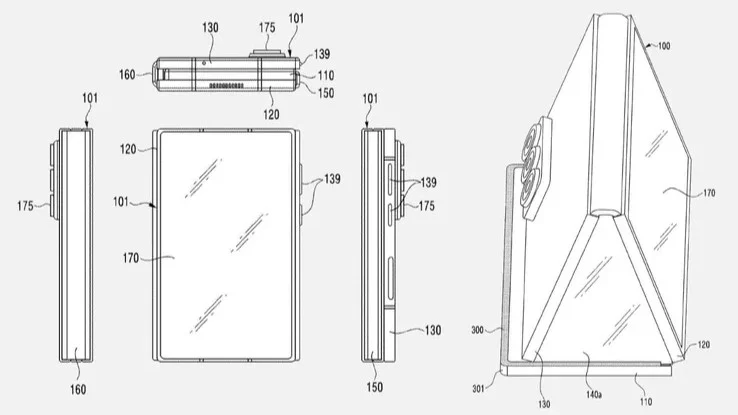
A patent recently granted by the United States Patent and Trademark Office also details a device with a sophisticated internal rail system and ruggedized hinges designed to reduce the stress on the organic light-emitting diode panel.
This patent suggests that durability is a primary focus for the team, as tri-fold screens are inherently more vulnerable to impact and debris.
“We will continue to introduce new form factors to provide a powerful and innovative mobile experience,” said TM Roh, President and Head of Mobile eXperience Business at Samsung Electronics, during a recent press briefing regarding the company’s future hardware roadmap.
While Roh did not explicitly name the tri-fold during that specific statement, he emphasized that Samsung is looking beyond the current fold-and-flip categories to maintain its lead in the premium segment.
The internal timeline for the release remains a subject of debate among industry insiders. While some leakers on social media platforms like X and Weibo suggest a late 2025 launch alongside the Galaxy Z Fold 7, others indicate that Samsung may wait until the technology meets higher durability standards.
The company is also navigating the software challenges associated with a three-pane interface. Android developers will need to optimize apps to transition across three different screen states, and Samsung is reportedly working with Google to refine the Taskbar and Multi-Active Window features for this larger canvas.
Market analysts suggest that the introduction of a tri-fold could help Samsung regain momentum in the Chinese and European markets where brands like Honor and Xiaomi are gaining ground with thinner folding designs.
By offering a larger screen that approaches the size of a standard laptop or professional tablet, Samsung is positioning the device as a productivity tool rather than a mere novelty.
The cost of production remains the final hurdle for the project. Current estimates suggest a tri-fold device would carry a price tag significantly higher than the $1,899 Galaxy Z Fold 6, potentially placing it in a new ultra-premium category.
Samsung is currently evaluating the yield rates of its foldable panels at its facilities in Vietnam to determine if a consumer release is financially viable within the next twelve to eighteen months.